When Does Your Neuropsychological Testing
Children with learning difficulties: Understand challenges with attention, memory, reading, writing, or learning.
Students with concentration problems: Explore difficulties with focus, organisation, and academic performance.
Adults with memory concerns: Assess changes in memory, reasoning, or everyday functioning.
Individuals with neurological conditions: Evaluate cognitive changes associated with conditions such as stroke, epilepsy, or traumatic brain injury.
Older adults: Investigate changes in memory, thinking, or independent daily activities.
Individuals with developmental concerns: Assess cognitive strengths and challenges associated with developmental conditions when clinically appropriate.
Moreover, an assessment can help families understand their concerns and explore practical ways to support daily functioning.
Signs You May Need a Neuropsychological Assessment
Cognitive difficulties can affect school, work, relationships, and independent living. Therefore, consider consulting a qualified professional if you or a family member experiences ongoing problems such as:
Frequent forgetfulness or difficulty retaining information.
Trouble concentrating or following instructions.
Challenges with planning, organising, or completing tasks.
Difficulty learning new skills or solving problems.
Changes in thinking or behaviour after a brain injury.
Academic difficulties that persist despite appropriate support.
Noticeable changes in memory or everyday functioning.
However, these symptoms do not automatically indicate a neurological disorder. A qualified professional can assess your concerns and determine whether neuropsychological testing is appropriate.
Conditions Evaluated Through Neuropsychological Testing
Neuropsychological testing can support the evaluation of cognitive difficulties associated with various neurological, developmental, and medical conditions. Moreover, the assessment helps professionals understand how these conditions may affect everyday functioning.
Depending on the individual’s concerns, an assessment may contribute to the evaluation of:
Attention-deficit/hyperactivity disorder (ADHD).
Specific learning difficulties.
Autism-related cognitive and adaptive concerns.
Traumatic brain injury.
Stroke and other neurological conditions.
Epilepsy-related cognitive difficulties.
Dementia and other causes of cognitive decline.
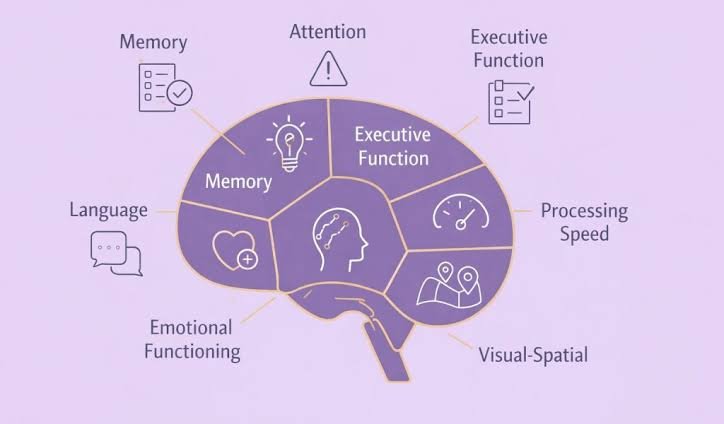
Memory, attention, and executive functioning problems.
In addition, neuropsychological testing does not diagnose every condition on its own. A professional considers test results alongside clinical history, observations, and other relevant assessments before drawing conclusions.
Types of Neuropsychological Tests
A neuropsychological assessment may include different tests depending on the person’s age, symptoms, and referral concerns. Therefore, the psychologist selects appropriate tools rather than using the same test battery for everyone.
1. Memory Testing
Memory tests assess how well a person learns, stores, recalls, and recognises information. Moreover, these tests can help identify patterns of memory difficulty that affect learning or daily activities.
2. Attention and Concentration Testing
These tests evaluate the ability to maintain focus, manage distractions, and follow instructions. In addition, they may help clarify attention-related difficulties at school, work, or home.
3. Intelligence and Cognitive Ability Testing
Cognitive assessments examine areas such as verbal reasoning, visual problem-solving, processing speed, and working memory. Therefore, they can help professionals understand an individual’s cognitive strengths and support needs.
4. Executive Function Testing
Executive functions help people plan, organise, make decisions, control impulses, and solve problems. Moreover, these tests can identify challenges that interfere with managing daily responsibilities.
5. Language and Visuospatial Testing
Language assessments examine skills such as naming, comprehension, and verbal expression. Similarly, visuospatial tests evaluate how a person understands visual information, shapes, patterns, and spatial relationships.
Our Neuropsychological Testing Process
Understanding the assessment process can help you feel more comfortable before your appointment. Therefore, we recommend discussing your concerns and expectations with the qualified professional before testing begins.
Step 1: Initial Consultation
The psychologist discusses your symptoms, medical history, developmental background, educational experiences, and current concerns. Moreover, this conversation helps establish the purpose of the assessment.
Step 2: Selection of Appropriate Tests
The psychologist chooses suitable tests based on your age, abilities, symptoms, and assessment goals. In addition, the professional considers language, educational background, and other factors that may affect test performance.
Step 3: Cognitive Assessment
You complete selected tasks that examine memory, attention, reasoning, language, and other relevant abilities. However, the duration and number of tests vary according to the individual’s needs.
Step 4: Interpretation of Results
The psychologist analyses your performance alongside your history and relevant observations. Therefore, the findings provide a broader understanding of your cognitive strengths, difficulties, and possible support needs.
Step 5: Feedback and Recommendations
The professional explains the findings and discusses appropriate next steps. Moreover, recommendations may include further medical evaluation, psychological support, educational strategies, cognitive rehabilitation, or follow-up assessments.
Benefits of Neuropsychological Testing
A comprehensive neuropsychological assessment can provide valuable information about cognitive functioning. In addition, it can help individuals, families, educators, and healthcare professionals make informed decisions.
Key benefits may include:
Better understanding of cognitive abilities: Identify strengths and areas that need support.
Individualised recommendations: Explore suitable strategies for learning, work, and everyday activities.
Educational planning: Help guide appropriate learning support when relevant.
Rehabilitation planning: Inform cognitive rehabilitation goals after certain neurological conditions or injuries.
Monitoring cognitive changes: Support comparisons over time when repeat assessments are clinically appropriate.
Improved family understanding: Help caregivers understand cognitive challenges and practical support options.
However, test results do not guarantee a specific outcome. The professional interprets findings within the context of each person’s circumstances and overall health.
How to Prepare for Neuropsychological Testing
A little preparation can help you feel more comfortable during your appointment. Therefore, consider these simple steps before your assessment:
Get adequate sleep the night before your appointment.
Eat your usual meals and stay hydrated.
Carry relevant medical records and previous assessment reports.
Bring a list of current medications.
Share your concerns and symptoms honestly.
Inform the psychologist about any hearing, vision, language, or learning difficulties.
Follow your doctor’s instructions regarding medications; do not stop prescribed medicines on your own.
Moreover, you do not need to practise test questions beforehand. The assessment aims to understand your current abilities, so answer each question to the best of your ability.
Neuropsychological Testing for Children and Adults
Neuropsychological Testing for Children
Children may experience difficulties with attention, learning, memory, language, or problem-solving for several reasons. Therefore, a child-focused assessment can help clarify their cognitive profile and identify areas where additional educational or developmental support may help.
Moreover, the psychologist considers the child’s age, developmental history, school performance, and behaviour when selecting appropriate tests. Parents and caregivers may also provide useful information about the child’s everyday functioning.
Neuropsychological Testing for Adults
Adults may seek an assessment because of memory problems, concentration difficulties, neurological conditions, brain injuries, or changes in everyday functioning. In addition, testing may help clarify cognitive concerns that affect work, relationships, and independent activities.
The psychologist selects suitable tests according to the individual’s symptoms and assessment goals. Therefore, the findings can guide further evaluation and practical recommendations.
Why Choose Professional Neuropsychological Testing in Nagpur?
Choosing a qualified professional is important when you need an accurate understanding of cognitive functioning. Moreover, a structured assessment should consider your personal concerns, relevant history, and individual needs rather than relying on a single test score.
When seeking neuropsychological testing in Nagpur, consider a professional who:
Has relevant qualifications and experience in psychological assessment.
Uses appropriate, standardised assessment tools.
Explains the assessment process and findings clearly.
Considers age, language, education, and cultural background.
Provides practical recommendations based on the assessment.
Respects your privacy and maintains professional confidentiality.
Therefore, ask about the professional’s qualifications, the scope of the assessment, the expected duration, and the report you will receive before scheduling your appointment.