Emotional Regulation Interventions
What are Emotional Regulation Interventions?
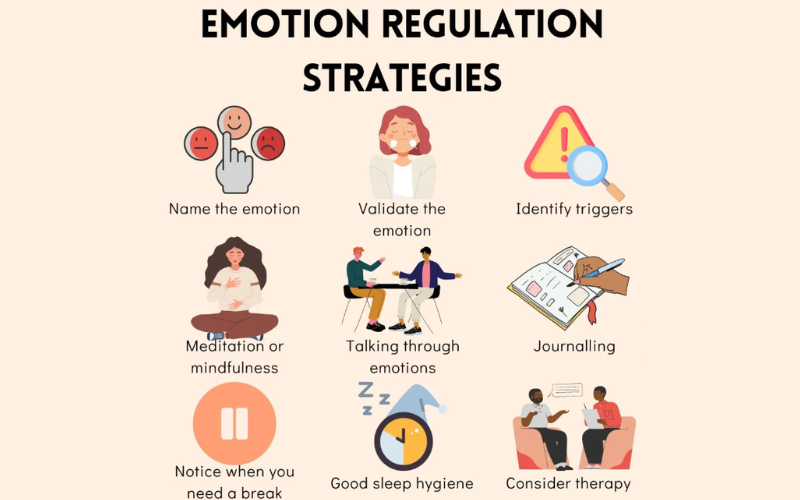
Emotional Regulation Interventions are structured psychological strategies that help individuals identify, understand, and manage their emotions in a healthy and appropriate manner.
These interventions focus on teaching practical skills to reduce emotional distress and improve self-control.
Our approach may include:
- Emotion identification and awareness
- Coping skill development
- Relaxation and breathing exercises
- Cognitive Behaviour Therapy (CBT) techniques
- Mindfulness practices
- Problem-solving strategies
- Stress management
- Anger management techniques
Furthermore, interventions are customized according to the individual’s age, developmental level, and specific emotional challenges.
Who Can Benefit from Emotional Regulation Interventions?
Emotional regulation support can benefit children, adolescents, and adults experiencing difficulties managing emotions.
Emotional Regulation for Anxiety and Stress
Individuals with anxiety often experience overwhelming emotions that interfere with daily functioning. Emotional regulation strategies help reduce excessive worry and improve coping abilities.
These interventions can help with:
- Generalized anxiety
- Social anxiety
- Panic attacks
- School-related stress
- Workplace stress
- Performance anxiety
Emotional Regulation for Children
Emotional regulation interventions help children improve:
- Self-control
- Frustration tolerance
- Emotional expression
- Impulse management
- Social interactions
- Problem-solving skills
Parents are also guided to reinforce healthy emotional responses at home.
Emotional Regulation for ADHD and Autism
Children and adolescents with Attention Deficit Hyperactivity Disorder (ADHD) or Autism Spectrum Disorder (ASD) often experience challenges with emotional control.
Therapeutic interventions focus on:
- Managing impulsive reactions
- Reducing emotional outbursts
- Improving flexibility in thinking
- Developing coping strategies
- Enhancing social understanding
As a result, individuals become better equipped to handle everyday situations.
Benefits of Emotional Regulation Interventions
- Better Emotional Awareness
Individuals learn to recognize, understand, and identify their emotions more effectively. - Improved Self-Control
Therapy helps reduce impulsive behaviors, anger outbursts, and emotional reactions. - Stronger Relationships
Healthy emotional expression improves communication and strengthens connections with family, friends, and peers. - Reduced Anxiety and Stress
Practical coping techniques help individuals manage difficult situations with greater calm and confidence. - Increased Confidence and Resilience
Learning to handle emotions effectively builds self-esteem and the ability to recover from setbacks. - Better Decision-Making
Improved emotional balance helps individuals make thoughtful and rational choices. - Enhanced Problem-Solving Skills
Emotional regulation supports clear thinking during stressful situations. - Improved Academic and Workplace Performance
Better focus, concentration, and stress management contribute to higher productivity. - Healthier Coping Strategies
Individuals develop positive ways to deal with frustration, disappointment, and challenges. - Greater Overall Well-Being
Strong emotional regulation skills promote a healthier, happier, and more balanced life.
Moreover, these skills support better academic, social, and workplace functioning, helping individuals build stronger relationships and achieve long-term personal growth.
Our Emotional Regulation Intervention Process
Step 1: Comprehensive Assessment
We evaluate emotional, behavioral, social, and cognitive functioning to understand the individual’s needs.
Step 2: Goal Setting
Specific and realistic emotional development goals are established.
Step 3: Skill Development Sessions
Therapeutic activities focus on identifying emotions, managing reactions, and developing coping strategies.
Step 4: Parent and Family Guidance
Families receive practical tools to reinforce emotional regulation techniques in everyday situations.
Step 5: Progress Monitoring
Regular follow-ups help track improvement and adjust intervention plans as necessary.
Consequently, individuals gradually develop healthier emotional responses and greater resilience.